Best Telescope Eyepieces for Beginners and Enthusiasts in November 2026
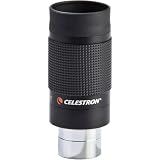
Celestron 8-24mm Zoom Telescope Eyepiece with Fully Multi-Coated Optics | Variable 8-24mm Magnification, One Eyepiece Replaces Multiple Focal Lengths, Smooth Twist-Zoom Operation, 1.25" Barrel
-
EFFORTLESS ZOOM FROM 8MM TO 24MM FOR CUSTOMIZABLE STARGAZING!
-
ONE EYEPIECE REPLACES MANY, SAVING YOU TIME AND MONEY!
-
COMPATIBLE WITH ALL 1.25” TELESCOPES; ENJOY UNIVERSAL VERSATILITY!


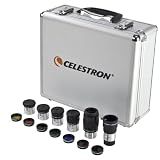
Celestron Eyepiece, Barlow & Filter Telescope Accessory Kit – 1.25" Barrel | 14 Essential Telescope Accessories, 5 Plossl Eyepieces, 2x Barlow, 7 Colored & Moon Filters, Includes Premium Metal Case
- ALL-IN-ONE KIT: 5 PLÖSSL EYEPIECES & 2X BARLOW DOUBLES MAGNIFICATION!
- EXPLORE MORE: INCLUDES COLORED FILTERS FOR ENHANCED CELESTIAL VIEWING!
- STURDY CASE: PROTECTS YOUR GEAR & ROOM TO GROW YOUR COLLECTION!
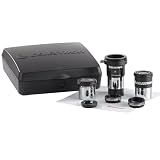
Celestron AstroMaster Telescope Accessory Kit – 1.25" Eyepieces & Filters | Essential Accessories for New Astronomers, 2 Eyepieces, 2x Barlow and Filters, Expand Your Capabilities, Easy to Use
- ENHANCE VIEWING WITH 8 VERSATILE ACCESSORIES FOR ANY TELESCOPE.
- ATTACH YOUR DSLR CAMERA EASILY FOR ASTROPHOTOGRAPHY MAGIC.
- ENJOY A 2-YEAR WARRANTY AND EXPERT SUPPORT WITH EVERY PURCHASE!
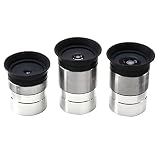
Starboosa 1.25-Inch Telescope Eyepiece Set, 4mm 10mm 20mm | Multi-focal eyepiece kit; fully multi-coated optics
-
ENJOY CRISP VIEWS WITH UPGRADED MULTI-COATED OPTICAL GLASS LENSES!
-
SOFT EYECUPS ENSURE COMFORT FOR BOTH BEGINNERS AND PROFESSIONALS.
-
VERSATILE FOCAL LENGTHS LET YOU EXPLORE CELESTIAL WONDERS IN DETAIL.
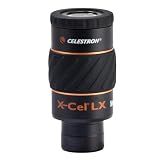
Celestron X-Cel LX 5mm Eyepiece for Telescopes - High-Power Planet Views | High-Power Planetary Views, 60° Wide Field of View, Long Eye Relief, Twist-Up Eyecup, Fully Multi-Coated Optics
- OPTIMIZED 60° FIELD FOR STUNNING PLANETARY VIEWS.
- COMFORT BOOST WITH TWISTABLE POP-UP RUBBER EYEGUARDS.
- DEPENDABLE SUPPORT: 2-YEAR WARRANTY FROM CELESTRON.
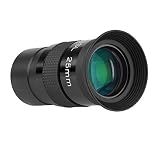
SVBONY 25mm Telescope Eyepiece, 40 Degree 1.25 inch Plossl Eyepiece
- WIDE 40° FOV: EASILY OBSERVE BRIGHT NEBULAE AND CENTER OBJECTS.
- FMC LENS TECHNOLOGY: CLARITY IN LOW-LIGHT; BRIGHTER, CLEARER IMAGES.
- DURABLE & SECURE: COMES WITH A PROTECTIVE CASE AND ANTI-SLIP GRIP.
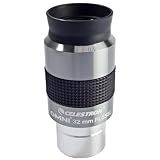
Celestron Omni 1.25" 32mm Telescope Eyepiece for Expansive Star-Field Views | Wide Deep-Sky Views, 4-Element Plössl Design, Fully Multi-Coated Optics, Sharp High-Contrast Views, Blackened Lens Edges
- AFFORDABLE 4-ELEMENT PLOSSL DESIGN FOR SUPERIOR OPTICAL CLARITY.
- RUBBER EYECUPS ENHANCE COMFORT AND CONTRAST FOR ALL USERS.
- 2-YEAR WARRANTY & EXPERT SUPPORT FROM A TRUSTED CALIFORNIA BRAND.
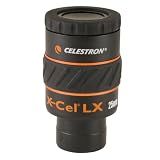
Celestron X-Cel LX 25mm Eyepiece for Telescopes - Wide Low-Power Views | Low-Power Wide-Field Views, 60° Wide Field of View, Long Eye Relief, Twist-Up Eyecup, Fully Multi-Coated Optics
- ENJOY STUNNING PLANETARY VIEWS WITH A 60° FIELD OF VIEW!
- COMFORTABLE POP-UP EYEGUARDS ENHANCE VIEWING CONTRAST EASILY.
- BUY CONFIDENTLY WITH A 2-YEAR WARRANTY AND EXPERT SUPPORT!
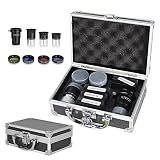
Celticbird Astronomical Telescope Accessory Kit - with 3pcs Plossl Eyepieces Set, 4pcs Filter Set, a 2X Barlow Lens
- ENHANCE YOUR TELESCOPE’S POWER WITH 8 ESSENTIAL ACCESSORIES!
- CAPTURE STUNNING ASTRONOMY PHOTOS WITH THE DSLR ADAPTER!
- ENJOY CLEARER VIEWS OF PLANETS WITH SPECIALIZED COLOR FILTERS!
The Best Telescope Eyepiece Lens for Planets in 2026 is usually not the one with the fanciest box or the widest advertised field. For Jupiter, Saturn, and Mars, the eyepiece that wins is the one that matches your telescope’s focal length, your local seeing conditions, and your tolerance for eye relief. In real backyard use, that often means a planetary eyepiece in the 5mm to 8mm range for many mid-size scopes, not the ultra-high-power option beginners assume they need.
I’ve spent enough cold nights swapping telescope eyepiece lenses under mediocre suburban skies to know one thing: planets punish bad eyepieces faster than almost any other target. A cheap wide-angle design can look fine on the Moon, then suddenly turn Saturn’s rings soft at the edge, wash out Jupiter’s bands, or make focusing feel mushy. The right eyepiece lens for telescope use gives you sharper contrast, cleaner limb definition, and longer comfortable viewing sessions.
Below, you’ll get a practical breakdown of what actually works, which focal lengths make sense by budget, and how to avoid buying an eyepiece for telescope use that looks powerful on paper but performs poorly at the eyepiece.
How we select products: Our team reviews products daily, analyzing customer ratings (4.0+ stars minimum), pricing trends, discount history, optical design specs, and real buyer feedback to surface options that provide the best value. For this guide, we also compared common focal lengths, eye relief, barrel size, and recurring review patterns tied specifically to planetary viewing.
What is the Best Telescope Eyepiece Lens for Planets in 2026 for most backyard observers?
For most backyard observers, the Best Telescope Eyepiece Lens for Planets in 2026 is a 1.25 telescope eyepiece designed for high contrast, moderate apparent field, and consistent sharpness near the center. The sweet spot is usually 6mm to 7mm if you own a typical beginner or intermediate scope with focal lengths around 650mm to 1200mm.
Why that range? Because planetary viewing is magnification-sensitive. A 6mm eyepiece of telescope setup gives 100x in a 600mm scope, 150x in a 900mm scope, and 200x in a 1200mm scope. That covers the practical range where Jupiter still looks crisp on many nights.
If you want one definitive answer, here it is: the best planetary eyepiece is the shortest focal length your telescope and sky can support without losing sharpness. In average seeing, that’s often less power than the marketing suggests.
How we picked the Best Telescope Eyepiece Lens for Planets in 2026
I didn’t rank these choices by magnification alone, because that’s where a lot of bad recommendations go wrong. Planets demand contrast, edge control, eye relief, coatings, and stable focus, not just raw power.
Here’s the exact criteria used:
-
Sharp on-axis performance
- Planetary detail lives near the center of the field.
- I gave extra weight to eyepieces with review patterns mentioning crisp belts on Jupiter, clean Cassini Division visibility, and easy snap-to-focus behavior.
-
Useful focal lengths for real scopes
- The best eyepiece lens telescope setups for planets usually land between 4mm and 10mm.
- Anything shorter than 4mm often becomes too seeing-dependent for beginners.
-
Comfort and eye relief
- If you wear glasses, 12mm to 20mm eye relief is much easier to live with.
- Several otherwise sharp designs become frustrating after 10 minutes because the eye position is too tight.
-
1.25-inch compatibility
- Most buyers need a telescope eyepiece 1.25 format.
- It’s the standard size for entry-level and midrange refractors, reflectors, and Dobsonians.
-
Review consistency
- Options with 4.3+ stars across large review counts consistently show fewer complaints about internal reflections and poor blackening.
- Low-volume listings often overpromise “HD planetary” performance and underdeliver.
That same logic also applies if you’re upgrading the stock eyepiece of a telescope included with a beginner setup. If you want more info, the upgrade path usually starts with one good planetary focal length rather than a giant set.
What to look for in the Best Telescope Eyepiece Lens for Planets in 2026
1. Choose focal length by magnification, not hype
Use this formula:
Magnification = Telescope focal length ÷ Eyepiece focal length
A 25mm vs 10mm vs 6mm decision changes everything. A 25mm is great for locating objects and viewing larger lunar areas, while a 10mm gives moderate power, and a 6mm pushes into serious planetary territory.
2. Prioritize contrast over extreme field width
For planets, a massive apparent field matters less than clean, high-contrast central detail. Some narrower planetary designs outperform flashy ultra-wide options simply because scatter control is better.
3. Stick with the common barrel size
For most readers, a 1.25 telescope eyepiece is the correct choice. If your diagonal or focuser accepts standard 1.25-inch barrels, buying outside that format adds unnecessary complication.
4. Eye relief matters more than you think
Below about 10mm eye relief, many people start struggling to hold the full field comfortably. If you observe for 20 to 40 minutes at a time, comfort directly affects how much detail you actually see.
5. Consider a zoom telescope eyepiece carefully
A zoom telescope eyepiece can be excellent for testing what magnification your sky supports on a given night. That said, fixed focal length eyepieces often still win for peak planetary contrast and edge correction.
Pro tip: On many average nights, dropping from 200x to 150x reveals more planetary detail, not less. Sharper contrast beats larger blur every time.
Best options under the entry-level budget: where a cheap eyepiece for telescope use still makes sense
If you’re shopping lean, the best value move is usually a single mid-high-power eyepiece for a telescope, not a multi-piece kit. Kits often include redundant focal lengths and low-end optics that are acceptable on star clusters but underwhelming on Jupiter.
The best budget range for planetary use usually includes:
- 8mm to 10mm for smaller or shorter-focal-length scopes
- 6mm to 7mm for medium focal length scopes
- Fully coated or multi-coated optics
- Blackened lens edges if listed
- Consistent user reports of sharp center performance
A budget telescope eyepiece lens can still do a respectable job if your expectations are realistic. Just don’t expect a bargain-bin ultra-short focal length to hold up at 250x under average seeing.
If you’re still matching accessories to the scope itself, this which telescope suits backyard stargazing guide helps make sense of the pairings.
The $25–$50 sweet spot: the Best Telescope Eyepiece Lens for Planets in 2026 for most buyers
This is where value gets interesting. In this bracket, you start seeing noticeably better coatings, more usable eye relief, and mechanical construction that doesn’t feel loose in the focuser.
For most buyers, this is the true sweet spot because you can get:
- Better control of glare around Jupiter
- More comfortable viewing than ultra-cheap short eyepieces
- Cleaner focus transitions
- Less internal reflection on bright lunar and planetary targets
If you own an 8-inch Dobsonian, this range often gives the best first upgrade from the stock eyepiece in telescope kits. For example, a mid-power planetary eyepiece paired with a common 8-inch reflector will often outperform a cheaper “high power” alternative just by preserving contrast.
Related reading on common 8-inch setups is available on Writeas.
Premium picks over the midrange: when the Best Telescope Eyepiece Lens for Planets in 2026 is worth paying more for
Premium planetary eyepieces justify their cost in three areas: contrast, comfort, and consistency. You usually notice it on Saturn first. The ring edges look harder, the dark gap structure is easier to hold, and the image “snaps” into focus with less ambiguity.
Paying more can be worth it if you:
- Observe planets weekly during opposition season
- Use a driven mount and spend long sessions at high magnification
- Wear glasses and need generous eye relief
- Already own a decent telescope and want your eyepiece telescope setup to stop being the weak link
Still, premium only matters if your scope is collimated and your atmosphere cooperates. Under poor seeing, even an expensive eyepiece for a telescope won’t rescue boiling air.
Fixed focal length vs zoom telescope eyepiece: which is better for planets?
If your goal is maximum sharpness, fixed focal length usually wins. Fewer optical compromises often mean better transmission and contrast, especially on bright targets where scatter is obvious.
A zoom telescope eyepiece wins on flexibility. It’s the easiest way to test whether tonight’s conditions support 120x, 160x, or 200x without swapping eyepieces every two minutes.
My practical advice: if you own only one premium eyepiece, make it a fixed focal length planetary model. If you want a learning tool that helps you discover your telescope’s real magnification limits, a zoom is absolutely worth considering.
You can also compare compact telescope ecosystems at https://dashai.ghost.io if you’re building a more travel-friendly observing kit.
What real reviews reveal about bad telescope eyepiece lenses for planets
The patterns are surprisingly consistent. Low-rated planetary eyepieces get criticized for kidney-beaning, poor edge blackening, glare on bright objects, and misleading magnification claims.
The biggest red flags:
- Ratings below 4.1 stars
- Repeated complaints about “can’t focus sharply on Jupiter”
- Very short eye relief with no warning in the listing
- “High power” marketing without clear focal length or field specs
- Lightweight plastic build paired with vague coating claims
Another pattern: budget kits that include 4mm, 6mm, 12mm, and 20mm pieces often make the shortest one nearly unusable in average conditions. On paper, it sounds versatile. In practice, the 4mm becomes a drawer accessory.
If you’re organizing multiple focal lengths, a telescope eyepiece case or one of the better telescope eyepiece cases is more useful than most people expect. Dust, cap loss, and scratched barrels are common once you own more than three pieces.
For unrelated but still indexed accessory trail links, you may also run across pages like www.google.nl or verruto.org, but for actual telescope buying decisions, review specificity matters more than random link trails.
Best Telescope Eyepiece Lens for Planets in 2026 by telescope type
Short refractors
Short refractors often need shorter eyepiece focal lengths to hit planetary magnification. If your telescope is around 400mm to 600mm focal length, a 6mm to 8mm eyepiece is usually more practical than a 10mm.
Long refractors and Maksutov-style designs
Longer focal lengths make planetary viewing easier. A 10mm eyepiece in a 1250mm scope already delivers 125x, which is enough for satisfying Jupiter and Saturn views on many nights.
Dobsonians and Newtonians
An 8-inch Dobsonian often performs best with 6mm to 9mm for planets, depending on conditions. If that’s your path, supplemental buyer notes on Writeas can still be useful for family setups where comfort and ease matter.
Compact smart scopes
Some compact systems limit accessory compatibility. Always verify whether your eyepiece lens for telescope upgrade is even user-swappable before buying.
The single best buying rule for planetary eyepieces
Buy for your realistic highest useful magnification, not the maximum printed on a sales page. If your telescope usually looks best between 120x and 180x, choose the eyepiece that lands there and gives you comfortable eye relief.
That one decision will improve planetary viewing more than chasing exotic specs.
Frequently Asked Questions
which part of the telescope reflects light to the eyepiece
In a reflecting telescope, the primary mirror gathers light and reflects it toward a smaller secondary mirror, which then directs it to the eyepiece. In a refractor, lenses bend the light instead, so there is no primary mirror doing that job.
how to clean a telescope eyepiece
Use a blower first, then a soft lens brush or microfiber cloth made for optics. If needed, add a small amount of lens-cleaning solution to the cloth-not directly to the glass-and gently wipe in circular motions to avoid streaks and coating damage.
25mm vs 10mm telescope eyepiece
A 25mm eyepiece gives lower magnification, a wider view, and easier target finding, while a 10mm eyepiece gives higher magnification and is better for the Moon and planets. For planetary detail, the 10mm is usually more useful, but only if your telescope and sky conditions support the extra power.
what is the best telescope eyepiece lens for planets in 2026 for beginners
For most beginners, the best choice is a 1.25-inch planetary eyepiece in the 6mm to 8mm range with comfortable eye relief and solid contrast. That focal length works well with many common starter scopes and avoids the overly dim, shaky view that often comes from going too short too fast.
is a zoom telescope eyepiece worth it for planets
Yes, a zoom telescope eyepiece is worth it if you want flexibility and you’re still learning what magnification your local sky can handle. For the sharpest planetary view, though, a good fixed focal length eyepiece usually still has the edge.