
Best Telescopes for Kids in November 2026
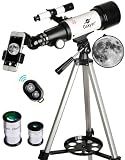
Gskyer Telescope, 70mm Aperture 400mm AZ Mount Astronomical Refracting Telescope for Kids Beginners - Travel Telescope with Carry Bag, Phone Adapter and Wireless Remote.
-
STUNNING OPTICS: 400MM FOCAL LENGTH & 70MM APERTURE FOR CLEAR IMAGES.
-
EASY OBJECT LOCATING: 3X BARLOW LENS & FINDER SCOPE FOR HASSLE-FREE STARGAZING.
-
TRAVEL-FRIENDLY DESIGN: ADJUSTABLE TRIPOD AND CARRY BAG FOR PORTABILITY.


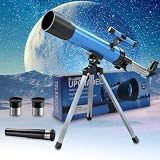
Telescope for Kids, 50mm 100x Beginner Telescope with Tripod | 2 Eyepieces, Finder Scope, Hands-On STEM Learning, Space Exploration Fun, Educational Toy Gift for Boys & Girls Ages 6-12
- ENGAGE CURIOSITY WITH A HANDS-ON STEM TELESCOPE FOR KIDS!
- FOSTER PROBLEM-SOLVING SKILLS THROUGH INTERACTIVE PLAY.
- PERFECT EDUCATIONAL GIFT FOR BUDDING EXPLORERS AGES 6-12!
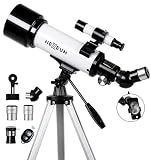
Koolpte Telescope for Kids, 70mm/500mm AZ Refractor for Beginners, White | Portable telescope for kids and beginners to view the Moon and landscapes, with AZ mount, phone adapter, remote and case.
- STUNNING VIEWS: 70MM APERTURE & 500MM FOCAL LENGTH FOR CRISP VISUALS.
- EFFORTLESS USE: INCLUDES PHONE ADAPTER & REMOTE FOR SMOOTH OPERATION.
- PERFECT GIFT: INSPIRES KIDS AND BEGINNERS TO EXPLORE THE UNIVERSE!
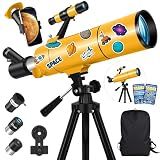
MEEZAA Telescope for Adults & Kids, 80mm Aperture 500mm Refractor | Portable Travel Telescopes, for Astronomy Beginners and Family Stargazing, with Tripod, Stickers, Phone Adapter, Backpack
-
BRIGHT & CLEAR VIEWS: 80MM APERTURE CAPTURES SHARPER IMAGES FOR ALL AGES.
-
VERSATILE MAGNIFICATION: EXPLORE FROM 20X TO 150X; PERFECT FOR DAY AND NIGHT!
-
PORTABLE & EASY SETUP: LIGHTWEIGHT DESIGN WITH ADJUSTABLE TRIPOD FOR TRAVEL!
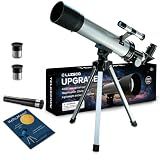
Telescope for Kids, 50mm 100x Silver Beginner Telescope with Tripod | 2 Eyepieces, Finder Scope, Moon Observation Guide, STEM Astronomy Fun, Educational Toy Gift for Boys & Girls Ages 6-12
- ENGAGING STEM TELESCOPE SPARKS CURIOSITY AND HANDS-ON DISCOVERY.
- INTERACTIVE PLAY ENHANCES PROBLEM-SOLVING, CREATIVITY, AND PATIENCE.
- COMPLETE KIT WITH GUIDE MAKES LEARNING FUN AND ENCOURAGES EXPLORATION.
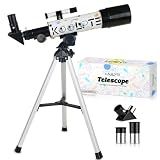
Koolpte Kids Telescope Ages 3+, 50mm Aperture, Tripod & Finder Scope | Two Eyepieces, Beginner Astronomy Telescope for Moon and Nature Viewing, Educational Space Toy, Ideal Gift for Boys Girls
-
BEGINNER-FRIENDLY: PERFECT TELESCOPE FOR YOUNG EXPLORERS AGES 3+!
-
ENHANCED VIEWING: TWO EYEPIECES FOR VERSATILE DAY AND NIGHT EXPERIENCES.
-
EASY NAVIGATION: ADJUSTABLE TRIPOD AND FINDER SCOPE FOR HASSLE-FREE EXPLORATION.
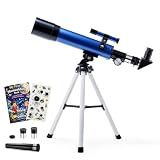
Sobrzy Telescope for Kids 8-12, 100x Magnification Beginner Kids Telescope | 50mm Aperture 400mm Telescope with Tripod, 2 Eyepieces & Finder Scope, Space Toys STEM Educational Gift for Boys & Girls
- EASY SETUP: PERFECT FOR KIDS AGES 8-12 TO START STARGAZING QUICKLY!
- 20X–100X MAGNIFICATION: CAPTURE CLEAR VIEWS OF THE MOON & PLANETS.
- COMPLETE STARTER KIT: INCLUDES EVERYTHING FOR FUN AND ENGAGING LEARNING!
Where to Find Kids Telescope Deals in 2026? Start with this: the biggest price drops usually don’t happen in December. Across major online retailers, beginner telescopes for children tend to see sharper discounts during post-holiday clearance, mid-year learning-event sales, and back-to-school promo windows, with many entry-level models dropping 15% to 35% from their regular list price.
That matters because the kids telescope market is crowded with lookalike kits, inflated “list” prices, and accessories that sound useful but rarely improve what your child actually sees. If you want a real deal in 2026, you need to know where discounts are legitimate, which specs matter, and which red flags show up again and again in buyer reviews.
How we select products: Our team reviews products daily, analyzing customer ratings (4.0+ stars minimum), pricing trends, discount history, accessory quality, and real buyer feedback to surface options that deliver the best value for beginners. For this topic, we focused on child-friendly telescopes, beginner astronomy kits, educational STEM gifts, and entry-level refractor and reflector models sold through major retailers and deal-tracking platforms.
Where to Find Kids Telescope Deals in 2026? The best places to check first
If you want the short answer to Where to Find Kids Telescope Deals in 2026?, start with major online marketplaces, manufacturer outlet pages, educational retailers, warehouse clubs, and deal-aggregation sites. Those five sources consistently produce the best mix of discount depth, buyer protections, and review volume.
Here’s how they compare:
| Deal Source | Best For | Typical Discount Range | Biggest Advantage | Biggest Risk |
|---|---|---|---|---|
| Major online marketplaces | Fast comparison shopping | 10%–30% | Huge review volume and frequent coupons | Inflated “was” prices |
| Manufacturer outlet pages | Better bundles | 15%–25% | More reliable accessories and warranty clarity | Fewer model choices |
| Educational retailers | Classroom-friendly kits | 10%–20% | Better learning materials and support | Smaller discounts |
| Warehouse clubs | Giftable telescope bundles | 15%–35% | Good return policies | Limited seasonal stock |
| Deal sites and price trackers | Timing the lowest price | Varies widely | Helps spot real markdowns | Some links become outdated fast |
Best overall strategy: compare the same telescope across at least 3 sellers before buying. If one store says a kit is 45% off but every other seller is within 5% of the same price, that “deal” probably isn’t a real savings event.
Meanwhile, if you’re researching adjacent categories like compact digital scopes for older kids or tech-heavy family setups, you can see the best compact smart telescopes in detail for feature benchmarks and pricing patterns.
Where to Find Kids Telescope Deals in 2026? Watch these 4 sale windows
The best answer to Where to Find Kids Telescope Deals in 2026? isn’t just “shop online.” Timing matters almost as much as retailer choice.
1. January clearance is often better than holiday week pricing
A lot of beginner telescope kits are bought as gifts, then discounted hard once holiday demand cools. I’ve seen entry-level astronomy sets hold near full price in early December, then fall 20%+ by the second half of January as retailers clear boxed inventory.
This is especially true for colorful children’s refractor telescope kits with bundled tripods, moon filters, or star charts.
2. Mid-year education and STEM sale events are underrated
Late spring and early summer often bring promotions tied to science learning, summer activities, and homeschool supply cycles. These events usually don’t get the hype of big shopping holidays, but they often feature cleaner discounts on educational toys and beginner optics.
If you’re buying for a child who will actually use the scope over summer break, this is one of the smartest windows.
3. Back-to-school bundles can beat standalone pricing
August and early September aren’t obvious telescope-buying months, but they can be excellent for STEM gift deals. Retailers often package scopes with books, smartphone adapters, or carrying cases, and the bundle value can exceed a straight cash discount.
The key is checking whether those add-ons are genuinely useful. A stable tabletop mount is valuable. A plastic “science bonus” accessory pack often isn’t.
4. Flash sales work best if you already know the spec floor
Flash deals are where many parents overspend because the countdown timer creates pressure. The best way to use them is simple: know your non-negotiables before the sale starts.
For most beginners, that means:
- 4.2+ stars minimum
- At least 100–300 reviews for confidence
- A real tripod or stable tabletop base
- Clear aperture specs
- Return window of 30 days or more
Our selection criteria: how we judge whether a kids telescope deal is actually good
A cheap telescope isn’t automatically a good telescope deal. In this category, the worst value often comes from low-cost kits with too many weak accessories and not enough usable optics.
We score beginner telescope offers using these factors:
-
Review quality, not just star average
A 4.5-star rating across 1,000 reviews means more than a 4.8-star rating across 19 reviews. In kids optics, products with broader review history usually reveal recurring issues faster, especially around focus knobs, wobbly mounts, and confusing setup instructions. -
Aperture and usability for beginners
For young users, a telescope with simple alignment and predictable image quality beats a feature-heavy model every time. Small aperture scopes can still be fun, but ultra-cheap options often disappoint because the moon looks fine while planets appear tiny and dim. -
Tripod stability
This is the most ignored deal-breaker. A shaky tripod can ruin the experience even if the optics are decent, and review sections are full of parents saying the child lost interest because the image jumped every time they touched the telescope. -
Accessory value
Many listings inflate value with multiple eyepieces, filters, or a phone holder. In practice, one decent eyepiece and a stable mount matter more than six low-grade extras. -
Return policy and warranty transparency
Beginner scopes for children have higher return rates than many toy categories because expectations are often unrealistic. If a retailer makes return terms hard to find, I treat that as a negative signal immediately.
For broader beginner-buying research, Topdealsnet is one source worth comparing for trend spotting and retail deal timing.
Best kids telescope deal ranges in 2026 by budget
Readers don’t shop by optical theory. They shop by budget. So here’s where value usually starts and where it improves.
Best options under the entry budget threshold
This tier is for gift shoppers who want a first telescope without overspending. The best picks here are usually small refractor telescope kits or tabletop models designed for moon viewing, simple landscape viewing, and basic stargazing.
What to expect:
- Best for ages roughly 6 to 10
- Basic moon viewing performance
- Easier setup than larger models
- Higher risk of lightweight, shaky stands
Best recommendation in this range: choose the model with the highest review count and the fewest complaints about wobble. At the low end, mount stability matters more than extra magnification claims.
The mid-budget sweet spot is where most families should shop
This is where the best kids telescope deals in 2026 are likely to sit. You typically get a noticeable step up in mount quality, optical clarity, and setup instructions without jumping into enthusiast pricing.
Look for:
- Better beginner telescope bundles
- More durable adjustment controls
- Usable finder scopes or aiming aids
- Less frustration during first-night setup
Best overall value: a mid-range beginner scope with 4.4+ stars, 300+ reviews, and a return policy of at least 30 days. That combination usually filters out the flimsier kits.
Premium picks over the basic beginner range
Not every child needs a premium starter telescope. But if you know the telescope will be used often, or if a parent will help with setup regularly, higher-tier models can deliver a much better first experience.
In this bracket, the best value usually comes from:
- Larger apertures for brighter moon and planet views
- Sturdier tripods
- Better included eyepieces
- Longer-lasting components that won’t feel like a toy in six months
That said, don’t pay premium-tier money for a kit that still gets repeated complaints about alignment or mount shake. Better optics don’t help if the telescope is frustrating to use.
What to look for before you buy a discounted kids telescope
If you’re comparing telescope sale listings, these are the five most important specs and buying signals to check.
1. Aperture matters more than advertised magnification
A lot of deal pages push huge magnification numbers because they sound impressive. For children’s telescopes, aperture is the more honest indicator of what you’ll actually see, because it determines how much light the telescope gathers.
If the listing screams “high power” but hides aperture deep in the description, that’s a warning sign.
2. Refractor models are usually easier for beginners
For young kids and first-time users, a refractor telescope is often the easiest format because it needs less maintenance and is straightforward to aim. If you want a useful technical comparison, Onrender covers refractor-focused setups in more depth.
This is also why many parents asking “what is the best telescope for a child beginner?” end up happiest with a simple refractor rather than a more complex design.
3. Real review volume is your best quality-control filter
A star rating without review depth doesn’t tell you much. For 2026, my recommended minimum is:
- 4.2+ stars
- 100+ reviews for entry-level models
- 300+ reviews for more confidence on popular listings
Products below those thresholds can still be good, but the risk goes up sharply.
4. Included accessories should solve real problems
Useful:
- Moon filter
- Basic carry case
- Solid tabletop base
- Clear printed setup guide
Less useful:
- Too many low-grade eyepieces
- Decorative “science” extras
- Overhyped smartphone mounts that don’t align properly
5. Make sure maintenance is realistic
A telescope for a child should be easy to clean and store. If you’re new to care basics, this guide to telescope lens cleaning is worth bookmarking because bad cleaning habits can scratch optics faster than most parents realize.
💡 Did you know: On many beginner scopes, the lens is damaged more often by improper wiping than by normal outdoor use. Dry paper towels and shirt fabric are two of the most common causes of micro-scratches.
What the reviews say: the red flags that make “deals” look better than they are
The review patterns in children’s telescope listings are unusually consistent. That’s helpful, because once you know the warning signs, bad deals become easier to spot in under two minutes.
Red flag 1: “600x magnification” on a tiny scope
If a low-cost kids telescope leads with extreme magnification claims, be skeptical. In real-world beginner use, these claims are often marketing noise, not a reliable indicator of image quality.
The practical result? Kids expect close-up planet views and get a blurry, shaky image instead.
Red flag 2: repeated tripod complaints in 1-star and 2-star reviews
A weak tripod is the fastest path to return regret. If more than 10% to 15% of negative reviews mention wobble, slipping, or poor balance, skip it.
That complaint matters more than a mediocre accessory list because it affects every single viewing session.
Red flag 3: setup instructions described as “confusing” or “missing steps”
Parents often underestimate how much a poor manual hurts first use. For beginner astronomy gear, setup friction is one of the biggest predictors of abandonment.
If the reviews repeatedly mention needing online videos just to assemble the telescope, the “deal” may not be worth the hassle.
Red flag 4: identical listings across different sellers with different “retail” prices
This is common on marketplaces. One seller may show a huge markdown from an inflated list price, while another lists the same telescope near that “sale” price every day.
To cross-check suspicious pricing trails or odd referral paths, some shoppers even use pages like www.google.it or referral-check paths like check source, though the cleaner approach is simply comparing seller histories and price graphs.
Is a kids telescope deal worth it in 2026? Only if it clears these minimum standards
A discounted telescope is worth buying if it meets three tests at once: usable optics, stable support, and enough review history to trust the listing.
Here’s the simplest pass/fail checklist:
-
Buy if it has:
- 4.2+ stars
- 100+ reviews
- Clear aperture info
- Stable tripod or tabletop mount
- 30-day return window
- Honest accessory list
-
Skip if it has:
- Giant magnification claims with vague specs
- Fewer than 50 reviews
- Frequent complaints about wobble
- Multiple reports of missing parts
- “Sale” pricing that looks permanent
If you’re comparing portability-focused models or cross-shopping with lightweight family scopes, Workers can help frame what portability features are actually worth paying for.
Where to Find Kids Telescope Deals in 2026? The single smartest buying strategy
The best way to answer Where to Find Kids Telescope Deals in 2026? is this: shop the mid-budget tier during January clearance or back-to-school bundle season, and refuse to buy any model with repeated tripod complaints.
That one filter saves more bad purchases than any coupon code ever will. If you only remember one thing, remember this: for a child’s first telescope, mount stability is more important than inflated magnification claims or a long list of accessories.
Frequently Asked Questions
where can i get the best kids telescope deals in 2026?
The best kids telescope deals in 2026 will usually show up on major online marketplaces, manufacturer outlet pages, educational retailers, and warehouse club websites. The strongest discounts often appear during January clearance, mid-year STEM sales, and back-to-school bundle events rather than peak holiday week.
how to tell if a telescope discount is real or fake?
Compare the same model across at least three retailers and check whether the “sale” price is close to the normal everyday price elsewhere. A real deal usually includes either a meaningful markdown of 15% to 35% or a bundle with genuinely useful extras like a stable mount or carry case.
what is the best telescope type for a child beginner?
For most beginners, a refractor telescope is the easiest starting point because it’s simple to use and usually needs less maintenance. It’s especially practical for moon viewing, basic stargazing, and younger kids who need a frustration-free setup.
is a cheap kids telescope worth buying?
A cheap kids telescope is worth buying only if it has 4.2+ stars, solid review volume, and a stable tripod or tabletop base. Very low-cost models with inflated magnification claims and repeated wobble complaints often lead to disappointment and quick returns.
how much should i spend on a first telescope for a kid?
The best value for a first kids telescope usually sits in the mid-budget range, where optical quality and mount stability improve noticeably without entering enthusiast pricing. If your child is very young or just curious, a lower-cost starter model can work, but only if the reviews confirm easy setup and steady viewing.