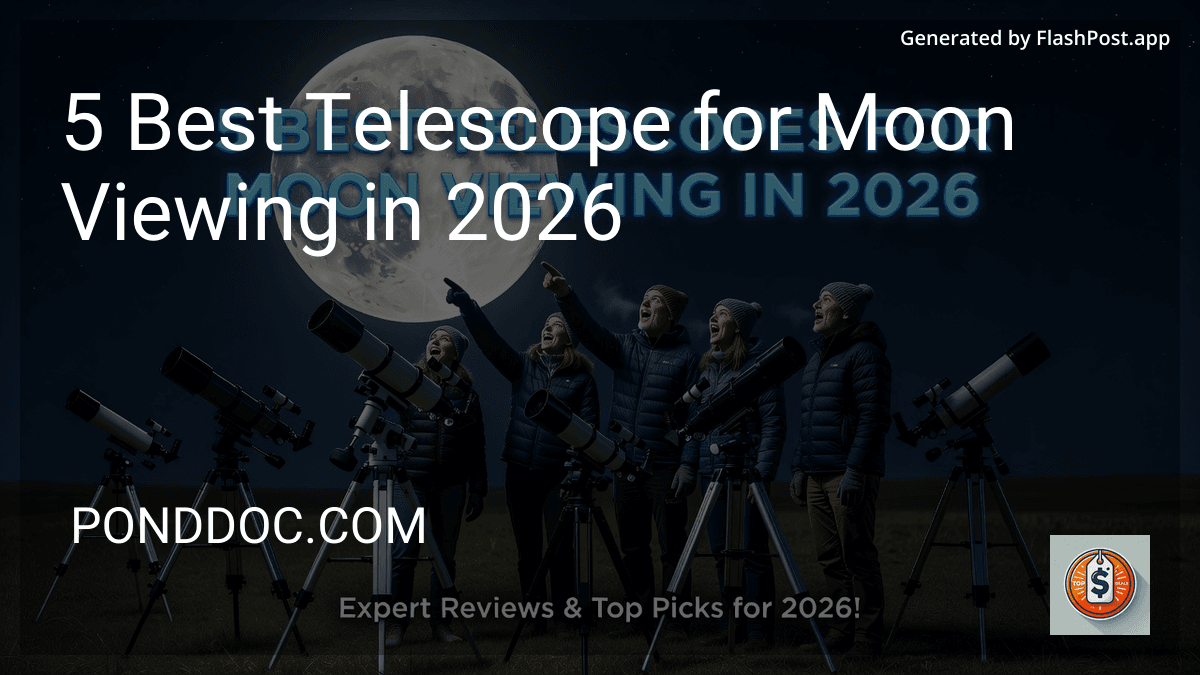
Best Telescopes for Viewing the Moon in November 2026
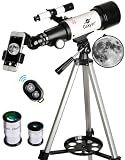
Gskyer Telescope, 70mm Aperture 400mm AZ Mount Astronomical Refracting Telescope for Kids Beginners - Travel Telescope with Carry Bag, Phone Adapter and Wireless Remote.
-
STUNNING OPTICS: 400MM FOCAL LENGTH & 70MM APERTURE FOR VIBRANT VIEWS.
-
VERSATILE MAGNIFICATION: INCLUDES 2 EYEPIECES + 3X BARLOW LENS FOR ENHANCED DETAIL.
-
TRAVEL-FRIENDLY: ADJUSTABLE TRIPOD & CARRY BAG FOR EASY PORTABILITY.


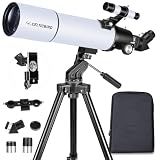
Celticbird Telescope for Adults High Powered, 80mm Aperture 600mm AZ Mount Refractor Telescope for Kids Beginners - Portable Telescopes for Adults Astronomy with Backpack, Phone Adapter, Moon Filter
- CAPTURE STUNNING CLARITY WITH OUR 80MM APERTURE AND COATED OPTICS!
- TRAVEL EASILY WITH A PORTABLE DESIGN AND ADJUSTABLE ALUMINUM TRIPOD!
- PERFECT FOR ALL AGES-SIMPLE SETUP FOR BEGINNERS AND KIDS!
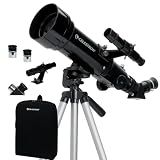
Celestron Travel Scope 70mm Beginner Portable Telescope with Backpack | 70mm Refractor Telescope Kit, Bright Lunar & Planetary Views, Day & Night Use, Backpack Included, Quick No-Tool Setup
- CRISP VIEWS ANYWHERE: 70MM APERTURE FOR STUNNING VIEWS ON-THE-GO!
- BEGINNER FRIENDLY: EASY SETUP FOR ALL AGES-NO PRIOR EXPERIENCE NEEDED!
- BONUS BACKPACK & SOFTWARE: CARRY ACCESSORIES AND EXPLORE THE STARS!
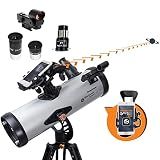
Celestron StarSense Explorer LT 114AZ Newtonian Smartphone Guided Telescope | Smartphone App Sky Navigation, Manual Reflector Telescope, Beginner Deep-Sky Telescope, Bright Celestial Views, Portable
-
EASY SETUP: DOCK YOUR PHONE, LAUNCH THE APP, SPOT CELESTIAL WONDERS!
-
PATENTED TECHNOLOGY: NAVIGATE THE SKIES WITH CUTTING-EDGE STAR RECOGNITION!
-
CURATED TARGETS: INSTANTLY VIEW TOP ASTRONOMICAL OBJECTS IN YOUR AREA!
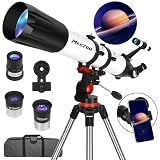
MEEZAA Telescope, Telescope for Adults High Powered Professional, 90mm Aperture 800mm Refractor Telescopes for Astronomy Beginners Stargazing Fully Multi-Coated with Tripod & Phone Adapter & Carry Bag
- UNMATCHED CLARITY: 90MM APERTURE PROVIDES BRIGHT, CLEAR IMAGES.
- VERSATILE VIEWING: 32X-240X MAGNIFICATION FOR STUNNING CELESTIAL DETAIL.
- EASY SETUP: 10-MINUTE ASSEMBLY; PERFECT FOR INSTANT STARGAZING FUN!
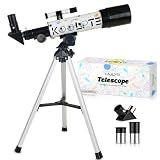
Koolpte Kids Telescope Ages 3+, 50mm Aperture, Tripod & Finder Scope | Two Eyepieces, Beginner Astronomy Telescope for Moon and Nature Viewing, Educational Space Toy, Ideal Gift for Boys Girls
-
DESIGNED FOR KIDS 3+: PERFECT FOR YOUNG EXPLORERS AND BEGINNERS!
-
TWO EYEPIECES: SWITCH BETWEEN LOW AND HIGH POWER FOR VARIOUS VIEWS!
-
ADJUSTABLE TRIPOD: EASY MOVEMENTS FOR ENDLESS EXPLORATION ADVENTURES!
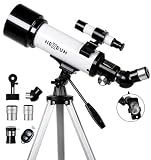
Koolpte Telescope for Kids, 70mm/500mm AZ Refractor for Beginners, White | Portable telescope for kids and beginners to view the Moon and landscapes, with AZ mount, phone adapter, remote and case.
- STUNNING 500MM FOCAL LENGTH & 70MM APERTURE FOR CLEAR VIEWS.
- INCLUDES TWO EYEPIECES AND A 3X BARLOW LENS FOR HIGH MAGNIFICATION.
- PERFECT GIFT FOR BUDDING ASTRONOMERS-ENCOURAGES OUTDOOR EXPLORATION!
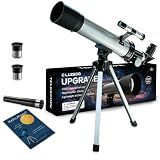
Telescope for Kids, 50mm 100x Silver Beginner Telescope with Tripod | 2 Eyepieces, Finder Scope, Moon Observation Guide, STEM Astronomy Fun, Educational Toy Gift for Boys & Girls Ages 6-12
-
ENGAGING STEM TOY FOR AGES 6-12: FOSTERS CURIOSITY AND CREATIVITY!
-
HANDS-ON LEARNING: BOOSTS PATIENCE, PROBLEM-SOLVING, AND INDEPENDENCE!
-
INCLUDES MOON GUIDE: ENCOURAGES EXPLORATION AND INTERACTIVE LEARNING!
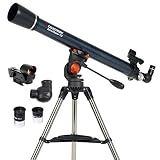
Celestron AstroMaster 70AZ Refractor Telescope for Moon & Planet Viewing | Fully Coated Glass Optics, Crisp Moon & Planetary Views, Alt-Azimuth Mount with Easy Manual Controls, Beginner Friendly
- PERFECT STARTER TELESCOPE FOR FAMILIES EXPLORING THE NIGHT SKY.
- HIGH-QUALITY 70MM OPTICS FOR STUNNING VIEWS OF CELESTIAL WONDERS.
- QUICK SETUP & STURDY DESIGN FOR SEAMLESS DAYTIME AND NIGHTTIME USE.
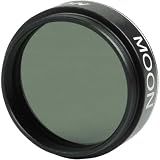
Celestron Moon Filter for Telescopes – Fits Most 1.25" Eyepieces | Reduces Lunar Glare, Improves Contrast, Reveals Surface Detail, Great for Bright Moon & Planet Viewing
- ENHANCE LUNAR VIEWS: REDUCE GLARE & BOOST CONTRAST INSTANTLY!
- PERFECT FOR BRIGHT PLANETS & OUTDOOR SCENES OVER SAND OR SNOW.
- QUICK & EASY INSTALL ON MOST 1.25” EYEPIECES-GET STARTED FAST!
The 5 Best Telescope for Moon Viewing in 2026 aren’t the biggest tubes or the most expensive mounts. For lunar observing, what matters most is sharp contrast at 50x to 180x magnification, easy setup, and an optical design that keeps crater edges crisp instead of mushy.
I’ve spent enough cold evenings chasing the Moon through thin clouds to know this: a telescope that’s “great on paper” can still be annoying in real use. A shaky tripod, a stiff focuser, or a cheap eyepiece can ruin a waxing gibbous session faster than light pollution ever will.
If you want the best telescope for viewing the moon, this guide narrows the field to five types that consistently deliver detail you can actually see: Tycho’s rays, the Alpine Valley, Mare Imbrium’s texture, and the jagged line of the terminator. You’ll also see which designs work best for beginners, small balconies, family use, and Moon-plus-planet viewing.
How we select products: Our team reviews telescopes by comparing customer ratings, return-pattern complaints, setup complexity, optical specifications, mount stability, and long-term value. We prioritize models with solid owner satisfaction, dependable mechanical quality, and enough aperture to reveal meaningful lunar detail, not just inflated magnification claims.
What makes the 5 Best Telescope for Moon Viewing in 2026 worth buying?
The best telescope for moon viewing has a simple job: show high-contrast detail on an extremely bright target without making you fight the equipment. That usually means better optics and mount stability beat raw magnification every time.
For this list, I ranked telescope types by four things that matter in actual backyard use:
- Optical sharpness on the Moon
- Mount steadiness at 100x+
- Ease of setup in under 10 minutes
- Value relative to aperture and included accessories
Here’s the quick ranking.
| Rank | Telescope Type | Best For | Typical Aperture Range | Why It Ranks Well for the Moon |
|---|---|---|---|---|
| 1 | Small-to-mid Dobsonian reflector | Best overall | 6" to 8" | Excellent resolution, stable mount, huge value |
| 2 | Short-to-mid refractor on alt-az mount | Best for beginners | 80mm to 102mm | Crisp contrast, low maintenance, easy aiming |
| 3 | Maksutov-Cassegrain | Best compact option | 90mm to 127mm | Sharp lunar detail in a small tube |
| 4 | Newtonian reflector on EQ mount | Best for learners who want versatility | 114mm to 130mm | Good aperture, strong Moon-and-planet performance |
| 5 | GoTo catadioptric scope | Best for tracking and convenience | 125mm to 150mm | Keeps the Moon centered, great for longer sessions |
Definitive pick: For most people, the best telescope for viewing the moon and planets is usually a 6-inch Dobsonian. It hits the sweet spot between detail, stability, ease of use, and cost efficiency better than almost anything else.
How we picked the 5 Best Telescope for Moon Viewing in 2026
I didn’t rank these by flashy marketing phrases like “675x power.” Those claims are usually the first red flag.
Instead, I focused on hardware that repeatedly performs well for telescope for viewing the moon searches and real owner expectations:
- Aperture: At least 80mm for satisfying lunar views, with 114mm to 203mm offering a clear step up in crater detail.
- Useful magnification: Realistically 50x to 180x for the Moon on most nights, depending on seeing conditions.
- Mount stability: A scope can have excellent optics and still disappoint if the image shakes for 3 to 5 seconds after every touch.
- Focuser quality: Fine focus matters on the Moon because the line between sharp and soft is obvious at the terminator.
- Owner feedback patterns: Consistent complaints about wobble, poor finder alignment, or bad included eyepieces pushed models down.
That’s also why I prefer optical systems with predictable performance over oversized “starter bundles.” If you’re still learning accessories, a guide to how telescope eyepieces work can save you from buying magnification you’ll barely use.
Which telescope is best for viewing the moon? Here are the 5 top picks
1) 6-inch Dobsonian reflector - Best overall telescope for moon viewing
If you ask me what telescope is best for viewing the moon, this is the one I’d recommend first to most adults. A 6-inch Dobsonian gives you enough aperture to resolve fine crater rims and shadow detail, but it stays manageable enough that you’ll actually carry it outside.
Why it works so well:
- 150mm aperture gathers plenty of light and improves resolution
- Stable rocker-box mount reduces vibration better than many cheap tripods
- Simple point-and-look design cuts setup time to about 5 minutes
- Works beautifully at 120x to 180x on steady nights
On a good evening, this setup shows Copernicus with terraced walls, Plato’s dark floor, and clear separation in bright ray systems. For many buyers, it’s also the best telescope for viewing moon and planets before you jump into larger, heavier instruments.
2) 90mm to 102mm refractor - Best beginner-friendly telescope for viewing the moon
A quality refractor telescope is the easiest recommendation for someone who wants sharp lunar views with minimal maintenance. Refractors don’t require mirror collimation, cool down quickly, and usually deliver crisp contrast straight out of the box.
Why beginners like it:
- Sharp views at 60x to 140x
- Little to no maintenance beyond lens cleaning
- Lightweight enough for balconies, patios, and grab-and-go observing
- Excellent for the Moon, bright planets, and daytime terrestrial use
The tradeoff is aperture. A 90mm refractor won’t match a 6-inch Dobsonian on raw detail, but it often beats cheaper reflectors in real-life ease of use. If you want “set it down and start observing” simplicity, this is a top contender for the best telescope for viewing the moon.
3) 127mm Maksutov-Cassegrain - Best compact telescope for moon viewing in apartments
This is my favorite recommendation for people with limited storage space. A 127mm Maksutov packs long focal length and strong lunar performance into a tube that feels surprisingly small.
Why it stands out:
- Long focal length makes it easy to reach high lunar magnification
- Compact optical tube fits tight storage spaces
- Strong contrast on crater edges and terminator shadows
- Very good option for best telescope for viewing the moon and planets
The one caveat is cooldown. Sealed designs can take longer to acclimate, sometimes 20 to 40 minutes depending on the temperature difference. Once settled, though, lunar detail is excellent.
4) 130mm Newtonian reflector on an equatorial or alt-az mount - Best versatile all-rounder
A 130mm Newtonian sits in a very useful middle ground. It offers noticeably more detail than small refractors, but it doesn’t become as bulky as bigger Dobsonians.
Why this type earns a place in the 5 Best Telescope for Moon Viewing in 2026:
- 130mm aperture is enough to reveal fine crater chains and mare texture
- More forgiving on budget than many compact catadioptric designs
- Good match for the Moon, planets, and brighter deep-sky objects
- Often reaches a practical sweet spot around 100x to 160x
The catch? Mount quality varies a lot here. If the tripod is underbuilt, a good optical tube can feel much worse than it really is.
5) Computerized tracking scope - Best for convenience and shared viewing
If multiple people will use the telescope, tracking becomes a huge quality-of-life upgrade. The Moon drifts out of view faster than beginners expect at 150x, and constant nudging gets old quickly.
Why a tracking scope helps:
- Keeps the Moon centered during long observation sessions
- Better for kids, outreach, and phone-through-eyepiece snapshots
- Great if you want easier transitions from Moon viewing to planets
- Useful for people who observe from light-polluted suburban yards
This category can be excellent, but only if the mount is reliable and alignment is simple. If you want extra reading on larger reflector formats, https://brain-buffet.writeas.com offers a useful angle on 8-inch Dobsonian options.
Best budget ranges in the 5 Best Telescope for Moon Viewing in 2026
Most buyers don’t shop by optical formula first. They shop by budget.
Best options under entry-level budget: small refractors and tabletop reflectors
At the low end, the safest picks are usually 70mm to 90mm refractors or tabletop reflectors around 100mm to 114mm. They won’t show every subtle rille, but they can still deliver satisfying views of major craters, maria boundaries, and waxing-phase shadows.
Best for:
- Kids with supervision
- Casual balcony use
- Buyers who want low setup friction
The sweet spot: 114mm to 150mm lunar scopes
This is where value jumps. Scopes in the 114mm to 150mm class usually offer the biggest visible improvement per dollar, especially for crater definition and terminator contrast.
For most households, this range contains the best telescope for moon viewing because it balances image quality, portability, and mount stability.
Premium picks over the midrange: tracking systems and 8-inch class optics
Once you move into larger apertures or motorized systems, convenience and detail both improve, but bulk increases too. An 8-inch reflector can reveal remarkably fine lunar structure, especially under steady skies, though it’s often more scope than a pure beginner needs.
For broader comparisons and off-site references, some readers cross-check sources like full article, but for lunar gear, hands-on telescope-specific evaluation matters much more than general web roundups.
What should you look for in a telescope for viewing the moon?
If you’re comparing two scopes and wondering what telescope is best for viewing the moon, these five criteria matter most.
1. Aperture of at least 80mm, ideally 114mm or more
The Moon is bright, so you don’t need massive light gathering just to see it. But for crisp detail in crater walls, central peaks, and shadow boundaries, 114mm+ gives a noticeably richer image than tiny starter scopes.
2. A stable mount with vibration settling under 2 seconds
This is huge. If tapping the focuser makes the image shake for 4 seconds, lunar observing becomes frustrating fast.
3. Realistic magnification, not inflated box claims
The Moon often looks best between 80x and 150x. Ads that scream 300x to 600x on tiny optics usually signal poor included eyepieces or weak barlows.
4. A usable eyepiece set
You only need a few sensible focal lengths to start. If you want a smarter upgrade path, read everything about telescope maintenance after you’ve learned basic eyepiece handling and cleaning discipline.
5. Simple setup you’ll actually use
A telescope that takes 20 minutes to assemble loses to one that’s ready in 5 minutes, even if the first one is slightly more powerful on paper. The best telescope for viewing the moon is the one you’ll carry outside on a Tuesday night.
💡 Did you know: The best lunar detail often appears along the terminator, the line between lunar day and night. That’s where low-angle sunlight creates long shadows that make craters, ridges, and valleys look dramatically sharper than they do during a full Moon.
What review patterns separate a good moon telescope from a disappointing one?
I see the same complaints over and over in weaker models. They usually aren’t about the Moon being hard to observe; they’re about cheap mechanics ruining an easy target.
Watch for these red flags:
- Shaky tripod complaints in more than a handful of reviews
- Plastic focusers that slip at higher magnification
- Included eyepieces described as “blurry,” “tiny,” or “hard to look through”
- Finder scopes that won’t hold alignment
- Marketing built around magnification instead of aperture
A practical rule: if reviews repeatedly mention “great optics but terrible mount,” treat it as a warning, not a minor flaw. Lunar observation depends on precision, and a bad mount wastes good glass.
Meanwhile, if you’re buying for younger users, Blogspot has a kid-focused angle worth comparing against adult-oriented lunar buying criteria. I’d still prioritize mount stability over novelty features.
There are also random directories and aggregator pages like urlmetriques.co, but they rarely tell you whether a scope stays steady at 120x or whether the focuser feels precise. That’s the difference between SEO clutter and useful telescope advice.
So, which of the 5 Best Telescope for Moon Viewing in 2026 should you buy?
If you want one clear answer, buy a 6-inch Dobsonian. It’s the strongest all-around choice for most people who want the best telescope for viewing the moon, with enough resolution to keep lunar observing interesting for years.
If portability matters more than aperture, choose a 90mm to 102mm refractor. If storage is tight, go with a 127mm Maksutov.
The single most important criterion is mount stability paired with enough aperture. A sharp 114mm-to-150mm telescope on a steady mount will beat a bigger, shakier scope almost every night.
Frequently Asked Questions
what telescope is best for viewing the moon
For most people, a 6-inch Dobsonian reflector is the best telescope for viewing the moon because it combines strong lunar detail, a stable mount, and simple setup. If you want a smaller option, a 90mm to 102mm refractor is the easiest beginner-friendly alternative.
is a refractor or reflector better for moon viewing
A refractor usually gives you clean, crisp contrast and easier maintenance, while a reflector usually gives you more aperture for the money. For pure value, reflectors often win, but for simplicity and grab-and-go lunar sessions, refractors are excellent.
how to choose a telescope for viewing the moon and planets
Start with aperture, mount stability, and realistic magnification, not marketing claims. A telescope in the 114mm to 150mm range with a steady mount is usually the best balance for viewing the Moon, Jupiter, and Saturn well.
is a telescope for viewing the moon worth buying if you live in the city
Yes, because the Moon cuts through urban light pollution far better than faint deep-sky objects. Even from a city balcony, a decent telescope for viewing the moon can show major craters, maria, and sharp terminator shadows.
what is the best telescope for viewing the moon and planets for beginners
The best telescope for viewing the moon and planets for beginners is usually a 90mm to 102mm refractor or a 6-inch Dobsonian, depending on your space and comfort with size. The refractor is easier to maintain, while the Dobsonian shows more detail for the same general budget.