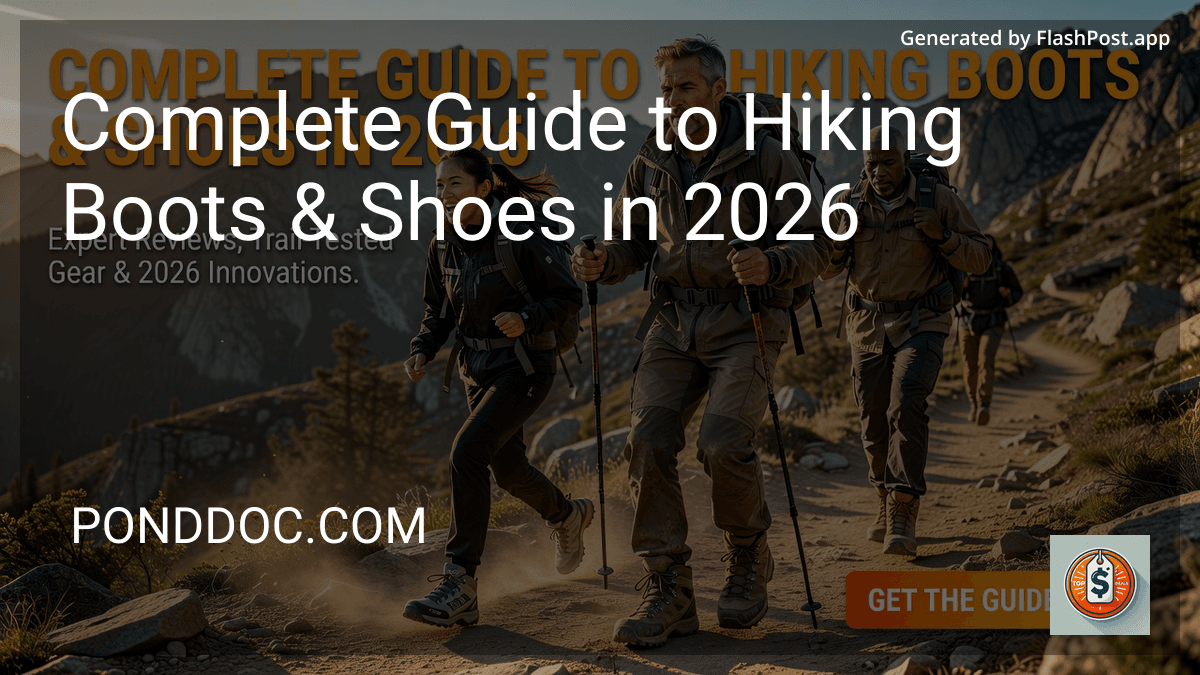
Best Hiking Boots in October 2026
Complete Guide to Hiking Boots & Shoes in 2026 starts with one uncomfortable truth: a huge share of trail foot pain still comes from wearing the wrong category of footwear, not from “bad feet” or lack of fitness. In long-distance hiking surveys over the past few seasons, blisters, hot spots, toe bang, and wet-foot fatigue remain among the most reported issues-and most of them trace back to poor fit, mismatched cushioning, or choosing a boot that’s too heavy for the terrain.
I’ve spent enough miles in mud, granite, scree, slush, and desert hardpack to know this firsthand. The right hiking footwear can make a 12-mile day feel efficient and stable; the wrong pair can turn mile 4 into a negotiation with your heels.
This guide breaks down exactly how to choose between hiking boots, hiking shoes, and trail hikers in 2026, what materials and features matter now, which price range gives the best value, and the red flags that show up again and again in buyer reviews.
How we select products: Our team reviews products daily, analyzing customer ratings (4.0+ stars minimum), pricing trends, discount history, construction details, warranty policies, and real buyer feedback to surface options that deliver solid trail performance and long-term value.
Why does the Complete Guide to Hiking Boots & Shoes in 2026 look different from older advice?
Ten years ago, the standard advice was simple: buy a tall, stiff boot and break it in. In 2026, that advice is outdated for most day hikers.
Modern lightweight hiking shoes now offer outsole grip, rock plates, waterproof membranes, and torsional stability that used to be limited to heavy mid-cut boots. Meanwhile, many hikers have realized that dropping even 8 to 12 ounces per foot can noticeably reduce fatigue over a full day, especially on rolling terrain.
That doesn’t mean boots are obsolete. It means your footwear should match the trail, pack weight, and weather-not tradition.
Boots vs hiking shoes vs trail runners: what’s the real difference?
Here’s the practical breakdown:
- Hiking boots: Best for heavier packs, rough off-trail travel, colder conditions, and hikers who want more ankle structure
- Mid-height hiking shoes: A middle ground for mixed terrain, moderate loads, and shoulder-season hiking
- Low-cut hiking shoes: Ideal for day hikes, fastpacking, and maintained trails where agility matters more than maximum support
- Trail runners used for hiking: Great for ultralight setups and dry conditions, but often less durable under repeated rock abrasion
The biggest shift in the Complete Guide to Hiking Boots & Shoes in 2026 is that “support” now comes as much from midsole design, heel lockdown, and platform stability as from collar height.
How did we evaluate hiking boots and shoes for this Complete Guide to Hiking Boots & Shoes in 2026?
I looked at the same criteria experienced hikers obsess over after a few bad purchases: outsole traction on wet rock, underfoot protection on sharp trails, upper durability, waterproofing trade-offs, and fit consistency across long mileage.
Just as important, I reviewed patterns in buyer feedback. Shoes with ratings under 4.2 stars and repeated complaints about heel slip or toe-box pressure tend to generate far more disappointment than pairs with flashy specs but better fit execution.
The criteria that actually matter on trail
We focused on:
- Traction: Lug depth of roughly 4 mm to 6 mm works well for mixed trail use
- Weight: Under 2 pounds per pair feels noticeably quicker for day hiking
- Waterproofing: Useful in snow, bogs, and shoulder seasons, but warmer and slower to dry
- Midsole feel: Firmer midsoles improve edging and load carry; softer ones improve comfort on long, smoother trails
- Toe protection: A substantial toe cap matters on rocky descents more than marketing claims about “all-terrain use”
- Durability: Reinforced mesh and welded overlays usually outlast thin knit uppers in abrasive terrain
For a broader seasonal comparison, Topminisite offers useful cold-weather context, especially if your hikes regularly cross into snow travel.
What should you look for before buying hiking footwear in 2026?
This is where most people save themselves from a return.
1. Does the toe box leave enough room on descents?
Your longest toe should have roughly a thumb’s width of space from the front when standing. On steep downhills, too little room causes black toenails and toe bang fast-especially if your pack adds another 15 to 25 pounds of forward pressure.
2. Does the heel stay locked without over-tightening?
A good hiking boot or hiking shoe should hold your heel securely without forcing you to crank the laces so hard that the top of your foot aches. If your heel lifts more than a few millimeters on stairs, expect friction and blister risk.
3. Is the outsole matched to your terrain?
For loose dirt, mud, and mixed mountain trails, deeper lugs matter. For hard-packed paths and dry rock, sticky rubber and stable edge contact often matter more than sheer lug depth.
4. Is the waterproof membrane worth the trade-off?
Waterproof hiking boots shine in slush, wet grass, stream-adjacent trails, and cold-weather hiking. But in hot weather above roughly 70°F to 75°F, many hikers find non-waterproof shoes cooler, lighter-feeling, and easier to dry after full soak-through.
5. Can the midsole handle your pack weight?
If you’re carrying under 20 pounds, many low-cut hikers feel excellent. Once you push past 25 to 30 pounds, a more supportive platform with a firmer shank or more structured midsole starts to matter.
6. How many reviews mention sizing inconsistency?
One of the strongest e-commerce clues is repeated sizing language. If dozens of reviews say “runs short,” “narrow in forefoot,” or “heel slips unless laced aggressively,” believe them.
7. Is the return policy trail-realistic?
A short indoor-only return window can be a problem because fit issues often appear after 3 to 5 miles, not in your living room.
Pro tip: Try hiking footwear on in the evening. Your feet typically swell during the day, and a pair that feels perfect at 8 a.m. can feel cramped after several miles.
Which type of hiking footwear works best for your trips?
The best answer depends less on style and more on use case.
Best for day hikes on maintained trails
Choose low-cut hiking shoes if you mostly walk marked trails, carry a light pack, and want quick foot turnover. They’re usually easier to break in and often weigh 20% to 35% less than traditional boots.
If that’s your lane, more info can help you compare lighter options and understand where weight savings matter most.
Best for rocky terrain and moderate backpacking loads
A mid-height hiking boot or supportive hiking shoe is the sweet spot for many people. You get more debris protection, a bit more structure, and usually a tougher upper without jumping all the way to a heavy backpacking boot.
Best for wet, cold, or shoulder-season hiking
This is where waterproof hiking boots still earn their place. They keep out snowmelt, cold puddles, and brush moisture better than airy mesh hikers, though you’ll pay a breathability penalty.
If you want another angle on waterproof comparisons, Blogspot has additional side-by-side discussion.
Best for snow-packed trails and winter use
Once temperatures drop and surfaces turn slick, insulation, gaiter compatibility, and outsole bite matter more than minimal weight. For winter-specific use, Devhubby is worth checking for snow-focused recommendations.
What price range gives the best value in the Complete Guide to Hiking Boots & Shoes in 2026?
You don’t always need the most expensive pair. But below a certain threshold, durability and fit consistency often fall off quickly.
Budget hiking shoes: best for casual day hikers
In entry-level models, you’ll usually get:
- Basic rubber outsoles
- Softer midsoles
- Simpler mesh uppers
- Less precise heel hold
These can work fine if you hike a few times per month on mellow terrain. But if review counts are low and ratings sit below 4.1 stars, failure points like sole delamination and lace eyelet tearing show up more often.
Mid-range hiking boots and shoes: the value sweet spot
This is where most hikers should shop. You’re more likely to get:
- Better outsole compounds for wet traction
- More durable rand protection
- Improved footbed comfort
- Better waterproof membrane execution
- More consistent sizing
In review data, this tier usually has the best balance of comfort, durability, and return-rate control. For most people, this is the smartest buy in the Complete Guide to Hiking Boots & Shoes in 2026.
Premium hiking footwear: worth it for frequent hikers
Paying more starts to make sense if you hike often, carry heavier loads, or need a very specific fit profile. Premium models often deliver better underfoot precision, stronger materials, and longer structural life-but only if the fit matches your foot.
That’s why I’d rather see you buy a mid-range pair that fits perfectly than a premium pair that causes heel lift.
What do buyer reviews reveal about the most common problems?
This is the section many shoppers skip, and it’s where the truth lives.
Red flag #1: “Waterproof” but dozens of heat complaints
A waterproof membrane can be excellent in the right climate, but if a large percentage of buyers mention overheating, sweaty socks, or slow drying, that’s a warning for summer hikers.
Red flag #2: Great out of the box, painful after 5 miles
Short test walks can hide forefoot pressure and arch mismatch. Repeated review phrases like “felt great at first” and “hurt on longer hikes” often point to a midsole shape issue, not a break-in problem.
Red flag #3: Outsole wears down too fast on rock
If reviewers mention visible lug wear after only a few weekends on granite or mixed rock, the rubber compound may prioritize softness over lifespan.
Red flag #4: Ankle collar rub on mid-cut boots
This tends to show up with stiffer uppers and certain sock heights. Even a high-rated pair can fail for your anatomy if the collar hits awkwardly near the malleolus.
Red flag #5: Waterproofing works, but the shoe stays wet forever
Membranes block external moisture, but once water gets in over the collar, some pairs can stay saturated for 24 hours or more in cool weather.
💡 Did you know: A shoe that is fully soaked from above often dries slower than a non-waterproof mesh hiker, because the membrane reduces evaporation as well as water entry.
For a fit-focused perspective on waterproof models, take a look at that guide.
How should hiking boots and shoes fit on your first try?
A proper fit should feel secure immediately, not “hopefully better later.”
You want snug at the heel, secure through the midfoot, and roomy at the toes. Pressure on the little toe, numbness across the forefoot, or arch pain in the first 10 minutes usually gets worse on trail.
Quick fit checklist before you keep the pair
- Wear the socks you actually hike in
- Test stairs or a decline board for toe contact
- Lace normally, then walk for 10 to 15 minutes
- Check for heel lift on inclines
- Make sure your toes can splay naturally
- Re-test with your loaded daypack if possible
Oddly enough, even unrelated shopping guides can remind you how chaotic online gear research gets. You can read more here if you want a reminder that specs alone rarely tell the whole story.
How long should hiking footwear last in 2026?
For typical use, many hiking shoes last roughly 400 to 700 miles, while sturdier boots may stretch further depending on outsole wear, midsole compression, and upper damage.
That said, mileage is only part of the picture. Frequent exposure to heat, wet-dry cycles, and abrasive rock can shorten life dramatically, especially in lightweight models.
Signs it’s time to replace them
- The midsole feels dead or flat
- You slip more on wet surfaces than you used to
- The heel counter collapses
- The outsole lugs are rounded off
- Waterproofing fails after the upper is still intact
- You’re getting new hot spots in familiar socks
If you’re cross-checking durability expectations across broader buying categories, you can also visit site, though trail-specific feedback remains far more useful than generic deal pages.
So what’s the single most important takeaway from this Complete Guide to Hiking Boots & Shoes in 2026?
Buy for fit and terrain first, category second.
A perfectly fitted hiking shoe with the right outsole and midsole for your trails will outperform a poorly fitted “more protective” boot almost every time. If you only remember one rule, make it this: prioritize heel lockdown and toe-box space before waterproofing, weight, or marketing claims.
Frequently Asked Questions
are hiking boots or hiking shoes better for most people in 2026?
For most day hikers, hiking shoes are the better choice because they’re lighter, easier to break in, and capable enough for maintained trails. Boots still make more sense if you carry heavier loads, hike in cold wet weather, or spend time on rough off-trail terrain.
do waterproof hiking boots make your feet sweat more?
Yes, often they do. Waterproof membranes reduce airflow, so in warm weather many hikers notice hotter feet and slower drying compared with non-waterproof mesh shoes.
how do i know if my hiking boots are too small?
Your toes will usually tell you first on descents. If your front toes hit the end of the shoe, your nails feel pressure, or your forefoot goes numb after a few miles, the fit is likely too short or too low-volume.
what is the best price range for hiking boots and shoes?
The mid-range is usually the best value because that’s where traction, comfort, and durability improve noticeably without a steep premium. Entry-level pairs can work for casual use, but frequent hikers usually benefit from better materials and more stable midsoles.
how long do hiking shoes usually last on regular trails?
Most hiking shoes last around 400 to 700 miles, depending on your weight, terrain, and walking style. Sharp rock, heavy packs, and repeated wet-dry cycles can wear them out much faster than smooth dirt trails.